
Materials used in construction must be able to demonstrate consistent performance, with long service life and minimum maintenance in areas that are exposed to very high temperatures, heavy rainfall, strong winds, or coastal humidity. In such scenarios, galvanised corrugated sheets have emerged as a reliable solution across different industries. Commonly utilised for roofing, cladding, and industrial applications, these sheets are designed to perform reliably under demanding conditions.
Manufactured with improved steel processing, advanced galvanising technology, and quality-controlled production, today galvanised corrugated sheets provide better protection, superior coating, and reliable strength, which makes them preferred in infrastructure and industrial projects under harsh weather conditions.
This blog explains what galvanised corrugated steel sheets are and what makes them different from plain galvanised sheets, hence trusted for their long-term durability.
The zinc coat serves as a protective shield to the metal. It shields it against moisture, oxygen, and other pollutants in the environment. A good galvanising process will ensure a uniform coat is applied to every area of the surface. No matter how much you scratch it, you should know that a protective layer is formed. This layer is sacrificial, and it shields the iron. The zinc acts as a corrosion primer.
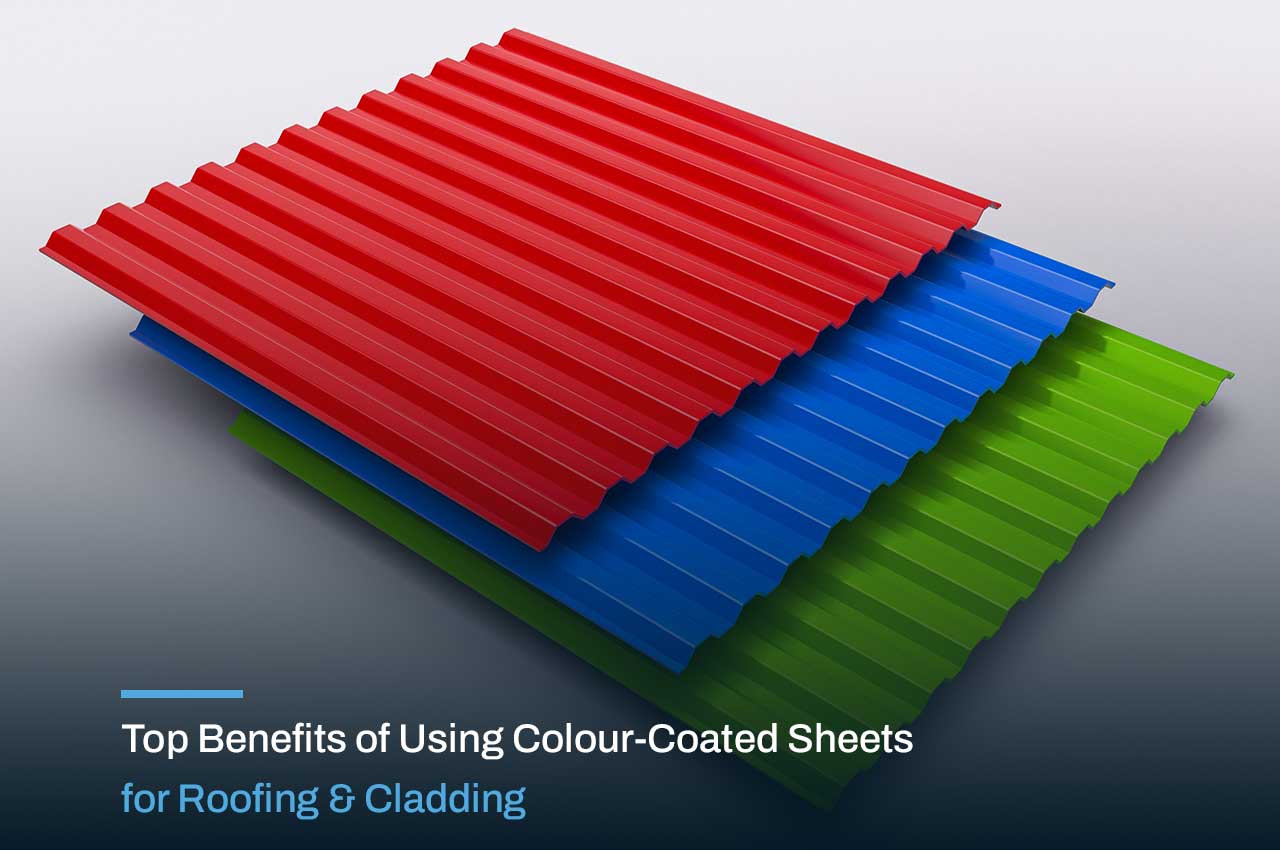
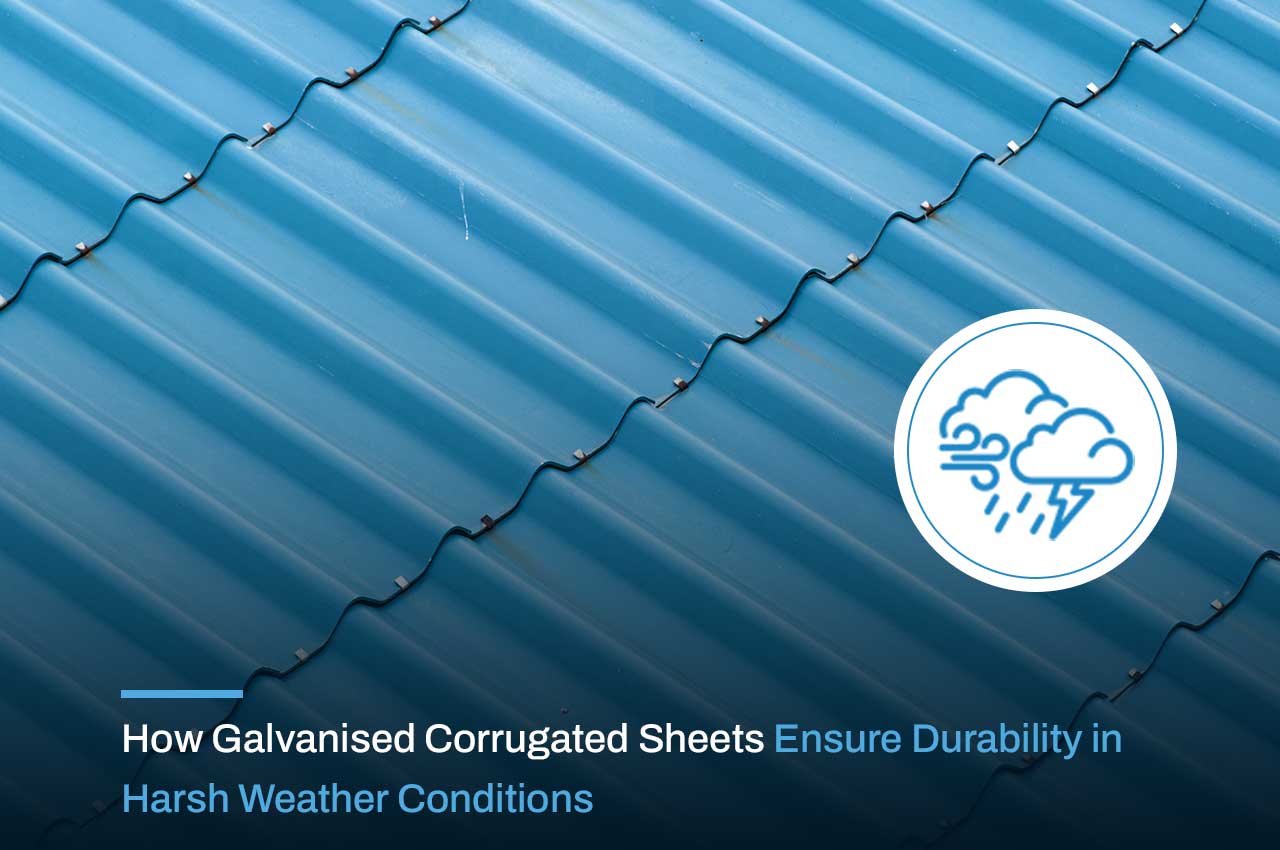
The corrugated design increases the stiffness, load-carrying capacity, and durability without adding much weight. Hence, GC Sheets are perfectly designed for industrial roofs, warehouses, factories, agricultural sheds, and areas close to the seashore or even in areas of high humidity.
Moreover, using modern manufacturing techniques and quality control, these sheets maintain their size consistency, coating consistency, and performance. The use of galvanised corrugated sheets is a reliable option for a longer period.
While both GC sheets and plain galvanised sheets are zinc-coated, their performance differs on various factors due to design, strength, and application suitability, particularly in extreme weather conditions.
1. Superior structural strength
This corrugated pattern makes the sheet strong. The wavy design increases rigidity and maintains the straightness of the panel. This gives GC sheets more ability to resist strong winds, rainfall, and mechanical pressure than flat sheets. This is because flat sheets bend or sag under the weight of rainfall.
2. Effective water drainage
Water drains quite effectively because of the ridges on the roof. Rainwater drains quickly, so water will not collect on top of the roof. This is even more useful when it is monsoon season, as water collecting on top of a roof tends to accelerate corrosion on normal roof sheets.
3. Better performance under thermal stress
With rises or falls in temperature, steel expands or contracts. The corrugated structure allows even distribution of thermal stress, hence diminishing the chances of deformation, cracks, or wear and tear. This makes galvanised corrugated sheets suitable for regions with extreme heat or varying climatic conditions.
4. Better corrosion resistance in challenging environments
When in harsh, rust-prone environments, like those near the coast, in an industrial setting, or in areas with a heavy level of pollution, protection against rust becomes an important consideration. The common zinc coating, combined with the robustness of a corrugated material, has a better lifespan compared to galvanised sheets.
5. Long-term cost efficiency
GC sheets have better value for money because of their durability, reduced maintenance needs, and extended service life. Their versatility in permanent or semi-permanent structures reduces costs related to replacement and repair.
Galvanised corrugated sheets are designed to withstand challenging environmental conditions, optimally balancing strength, corrosion resistance, and functional design. Advanced galvanising processes, quality-controlled manufacturing, and corrugated profiling ensure reliable protection against rain, wind, heat, and humidity.
Compared to plain galvanised sheets, GC sheets offer better structural stability, more efficient drainage, and a longer service life, thus making them an ideal choice for projects where durability, safety, and performance are essential. In reality, quality galvanised corrugated sheets represent an investment in long-term reliability and value.
Q. Why should you choose Galvanised Corrugated Sheets from MCMIL?
A. MCMIL produces Galvanised Corrugated Sheets with state-of-the-art galvanising lines and follows strict quality control to ensure consistent strength, uniform zinc coating, and durable corrosion resistance.
Q. How well do our GC sheets perform in harsh weather conditions?
A. Our GC sheets have been built to withstand the harshest weather conditions – heavy rainfall, strong winds, high humidity, and fluctuating temperatures – so they continue to perform dependably with minimum maintenance.
Q. What ensures the long service life of MCMIL galvanised corrugated sheets?
A. The ability to ensure durability is tied to precision manufacture, controlled coating thickness, and robust corrugated profiling to resist rust and structural fatigue.
Q. Are MCMIL GC sheets appropriate for industrial and coastal applications?
A. Yes, our GC sheets have been designed for industrial, agricultural, and coastal environments where high durability and resistance to weather elements are a must.