
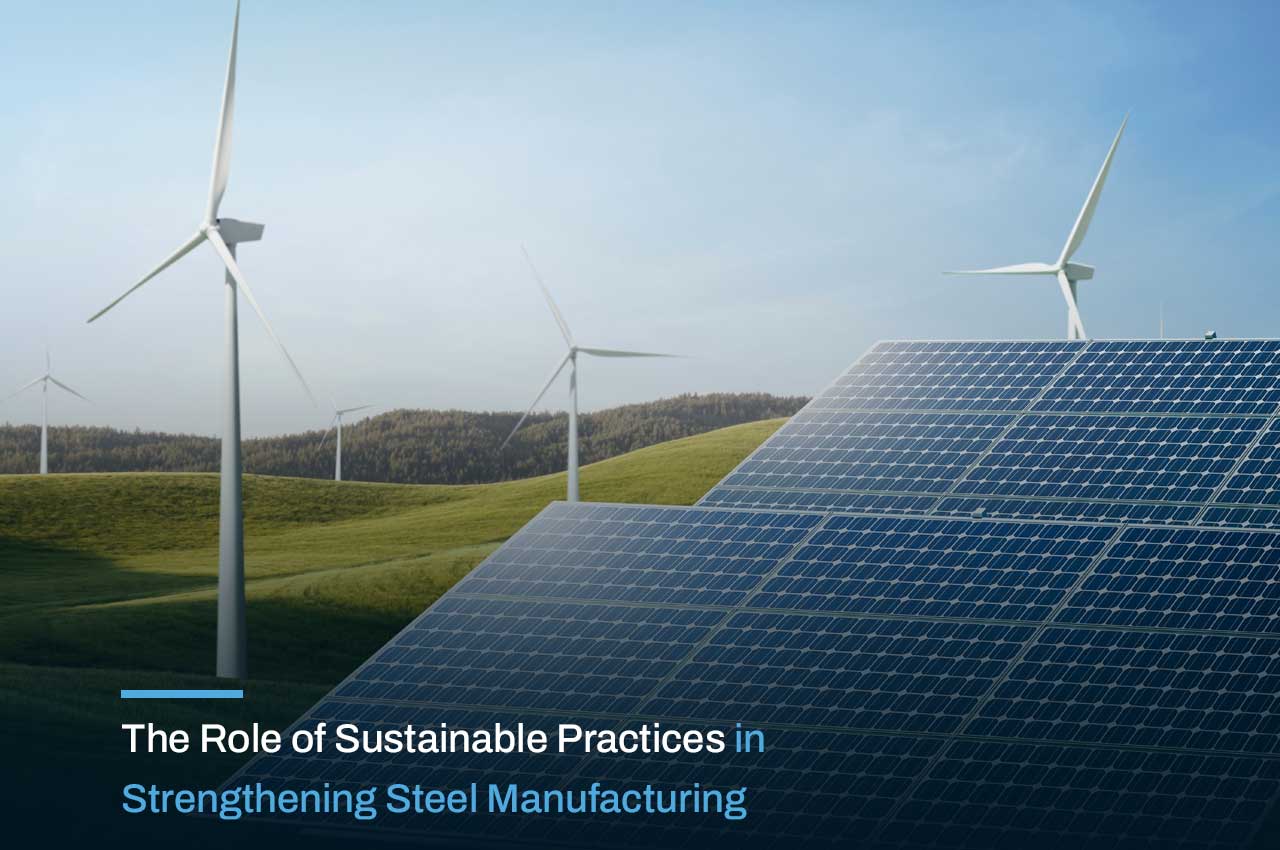
The basis of today’s civilisation is steel. It is a critical element in the production of numerous items, from cars and household goods to buildings and bridges. However, the conventional steelmaking process is one of the most environmentally and resource-intensive processes. With global industries transitioning toward decarbonisation, sustainable steel manufacturing has been an important area of focus. Sustainable steel manufacturing means modifying the processes for making, processing and recycling steel to build a balance between environmental responsibility and industrial production.
Sustainable steel manufacturing focuses on reducing the environmental impact of steel production through efficiency, innovation and the principles of circular economic concepts. It combines an ethical approach to business practices and resource-consciousness with the innovative nature of technology. Some examples of sustainable practices in steel production are:
Recycling and effective use of scrap
Recycling is essential for sustainability because steel can be recycled without losing its original qualities. Manufacturers can reduce their energy consumption, emissions and raw materials by using scrap steel rather than fresh iron ore. Electric Arc Furnaces (EAFs) are used mostly for this process, as scrap metal is employed as a replacement for the newly mined raw materials. There are now many steel plants that have developed scrap collection and sorting systems to keep the circulating supply of recyclable material.
Energy efficiency and cleaner technologies
The use of energy represents one of the highest shares of environmental responsibility of the steel sector. In particular, blast furnaces utilise coal as their primary energy input, which produces significant amounts of carbon dioxide. Companies have responded to this challenge by investing in cleaner and more sustainable processes, such as Direct Reduced Iron (DRI) technology, which uses natural gas or hydrogen rather than coal.
Water conservation and waste management
Water is essential in steelmaking as a cooling, cleaning, and processing agent. Sustainable facilities are implementing closed-loop systems where water is recycled/reused post-treatment. This reduces the use of fresh water from natural sources and helps eliminate thermal and chemical contaminants in the natural ecosystem.
Carbon reduction and emission control
Minimising the carbon footprint is the foundation of sustainable steel manufacturing. Factories and industry manufacturers are pursuing strategies towards achieving this goal through different mechanisms. Some factories are utilising biofuels or reducing hydrogen emissions, while other factories are working on the fundamental technology of carbon capture, utilisation and storage. Additionally, process optimisation, the use of raw materials, and real-time monitoring systems can accommodate the identification of hotspot emissions or better emission management overall.
The steel industry’s role in global infrastructure is indisputable, and so is the industry’s environmental footprint. Moving towards sustainability is important for many reasons:
A large environmental footprint
Steel has one of the largest contributions to global industrial greenhouse gas emissions. The usual approach to producing steel in blast furnaces emits over two tonnes of carbon dioxide for every tonne of steel produced; thus, the steel sector is a key target area for action on climate change. Sustainability technologies and processes can reduce emissions, as well as contribute to meeting international obligations on climate change.
Resource and energy intensity
Conventional methods of making steel require extensive energy, water, and raw materials, placing unprecedented demands on nature that will only increase further without sustainable alternatives. As a result of the consumption of these natural resources, steelmaking has a large environmental impact on ecosystems. Through increased efficiency and the recycling of resources, steelmakers are able to achieve cost efficiencies while also lessening their environmental impact.
Regulatory and market pressures
Governments around the world are enforcing stricter laws for environmental regulation and carbon pricing. In parallel, consumers seek responsibly sourced materials. To meet these demands while remaining competitive in the marketplace and establishing a strong brand reputation, the steel industry must implement sustainable practices in steel manufacturing.
Future readiness and innovation
As the world leans toward cleaner technologies and renewable energy, sustainability is becoming an indicator of industrial resilience. Steel producers who invest in innovation, like hydrogen-based reduction or renewable energy-powered furnaces, will be better positioned to prosper in a low-carbon economy.
Sustainable steel manufacturing is no longer a choice; it is essential to the future of steel. Circular production systems, cleaner energy, and responsible sourcing can enable the steel industry to play its critical role in global development while reducing its environmental impact.
Sustainable steel manufacturing is more than compliance; it is about innovation, responsibility, and creating a future where progress and nature coexist. Those companies that evolve their business models will not only enhance their operations but also create a cleaner, smarter, and more resilient world.
Q. What is sustainable steel manufacturing?
A. Sustainable steel manufacturing focuses on reducing environmental impact by using cleaner energy sources, recycling scrap, and improving process efficiency.
Q. What technologies are driving sustainability in the steel industry
A. Electric arc furnaces, carbon capture systems, and hydrogen-based steelmaking are among the leading innovations supporting sustainability.
Q. Why is sustainable steel manufacturing important for the future?
A. It ensures long-term industry viability by balancing economic growth with environmental protection and social responsibility.
Q. How is MCMIL contributing to sustainable steel manufacturing?
A. MCMIL implements energy-efficient processes, promotes recycling of steel scrap, and adopts low-carbon technologies to reduce environmental impact.